Pages

Tuesday, January 22, 2008

Will the Real Lilliput Station Please Step Forward?

I met my husband at a very small Bible college in South Carolina. There were seven of us all renting from the same landlord, living in two trailers (one for boys and one for girls) in the middle of nowhere. One of the students (who later became my brother-in-law) named the place "The Ranch." And the name stuck.

After being there for only a year, my (future) husband and I both returned home to prepare for our marriage the following year. Then my parents bought an old farmhouse in the country. My mom's lifelong dream was finally realized! Yet here I was six months from my wedding and once again uprooted. To make matters worse, our new "home" was just a backyard away from the railroad tracks. At nights they would come flying through. The house would shake, and I'd lie there in terror knowing that the only thing between us was the propane tank if one of them happened to leave the track. I did a lot of praying during those six months!

In an effort to make this place feel more like a home, I decided to give it a name. It had worked for The Ranch. Maybe it would work here too? I guess I was feeling a little small at the time. Why else would I have chosen the name "Lilliput Station"? I used that name again when I decided to start a Yahoo Group and a homeschool blog.   

I had no idea at the time that there REALLY was a place called Lilliput Station. Solomon was right, "There is nothing new under the sun." Follow this link to see the pictures.

Tuesday, August 28, 2007

There’s More to Home Than School

I was sorting through some papers this morning and came across a few quotes I had collected on the topic of "love."

My absolute favorite is an excerpt from a cotton commercial. The woman quoted is telling a short story of her childhood. Every night her mother came in, closed her window, and covered her. When she asked her mother why she did this, her mother replied, "Love is seeing a need and filling it." I think that is a really good definition.

When my daughter Kate was little, she was struggling with a particular punishment I had given her and was doubting my love. I told her this story. Then I asked her if she knew that I waited for her to fall asleep every night so I could cover her before I went to bed. That night, she faked sleep just so she could see if it was true. When I pulled the covers up and bent down to kiss her forehead, she opened her eyes and reached up to hug me. "You DO love me!" she exclaimed.

A second quote comes from Francis Bacon. "A crowd is not company, and faces are but a gallery of pictures, and talk is but a tinkling of cymbals, where there is no love."

And finally, a quote with no source~ "The first duty of love is to listen."

All of these remind me that love is an action. I can tell my children I love them, but it doesn’t mean anything if I don’t demonstrate it. My children don’t just need a teacher, they need someone who will listen to them, and sympathis with them, and sacrifice for them. They need a mother.

Therefore be imitators of God as dear children. And walk in love, as Christ also has loved us and given Himself for us, an offering and a sacrifice to God for a sweet-smelling aroma. Ephesions 5:2

I am not one of those people who enjoys constantly being surrounded by people, but living in a home with eight (homeschooled so they are with me constantly) children doesn't offer many opportunities for silence or solitude. I have learned to cope with this by tuning out the noise when I am feeling overwhelmed. But this can be a problem when my children come to speak to me and I "hear" them, without really listening. I can't count the times that I have agreed to something without having any idea what I was asked. So, one of my goals for this year is to demonstrate my love to my children by being a better listener, especially outside of the "classroom."

I'd also like to focus on more just for fun projects this year- reading, crafting, day trips. All of these things can be educational, but some of them ought to be done for no reason other than that they provide an opportunity to make happy family memories. So, those are a couple of goals I've come up with to help me refocus on the HOME part of our homeschool.

Thursday, July 5, 2007

A New Name For Notebooking

We've been "notebooking" almost as long as we've been homeschooling, yet it was only a couple of years ago that I realized it had a name. But I've got to be honest with you: I really don't like the name. While "notebooking" is technically a good description for what we do, it's only a good description if you already know what you are doing. You can't just walk up to someone and say "Yes, we use notebooking in our home education" without expecting a few questions. Which is why I've been trying to find something better. I haven't come up with anything stellar, but I think that the term "journaling" might be pretty good. After all, education happens during the daily adventures of life (some that happen naturally and some that are created by the "teacher") and a journal is a great place to write about adventures!

If something exciting happens, you naturally want to share it with someone else. And learning is a very exciting thing. Writing a short summary of things that have been read, stories that have been listened to, or field trips and activities that have been experienced is a great way to "review" learning and make sure those memories don't get lost. It's also makes it easier to share those memories with others. Maps and illustrations can also be drawn or copied and pasted into your journal. "Lapbooking" can be time and money intensive, but an occasional mini-book is a great addition to an educational journal and adds an interactive element to it. Photographs and small keepsakes from projects and field trips are also nice additions to a journal. Hands-on activities are a great way to make learning personal to your child and like other important events, they should be well documented. Just like any other journal, the contents of an educational journal will vary according to the personality of the writer- your creativity is the only limit.

So, there you have it: Educational Journaling. You heard it here first! ;o)

A Mother's Education

Even though homeschooling has become somewhat "normal" these days, it still receives more than a normal share of attention. Questions about legality and socialization have been replaced with questions about ability. "How will you teach them when they get to highschool?" "You must be really smart. I don't think I'm smart enough to teach my children." "You must have a lot of patience." I hear these comments often and they make me smile. In the eyes of the world, I may look like SUPER WOMAN, but I'm really quite ordinary.

It doesn't take a high IQ or a college degree to home educate. In fact, my own mother never went any farther than high school. She didn't know how to do chemistry and algebra was never her strong point. But if she wanted to learn something, she knew how to look it up. My mother was a researcher; and in the days before Google, she was the one to go to when you needed an answer. That is the true secret of home education: parents who love learning passing that love on to their children.

When people look at home education, they mostly focus on the children. Of course, the children are important and I believe that children do benefit from home education. But I think the education the mothers receive is just as beneficial. I'm not simply taking about academics, although there is that aspect. It amazes me how much I learn along with my children; and because I am learning too, it doesn't matter whether I "know it all." I am simply a facilitator, not a teacher. But I am learning other lessons as well.

I am learning to be patient. No, I wouldn't consider myself a patient person, but I hope I'm improving. Trust me, listening while a child sounds out the words of Green Eggs and Ham requires a LOT of patience. (Come on! I could say it from memory!) Explaining how to carry in addition for the seventeenth time (and knowing there are four others who still need to learn this concept) takes a lot of patience. And forcing yourself to ignore how long it took your five year old to fold the towels into that crooked heap (it would be so much easier to do it myself!) takes a lot of patience and continual self reminders these are important life skills he needs to learn. Throw in a three year old who suddenly developed a stutter and "Oh, Lord, did I REALLY ask you to help me learn patience!????" Yes, I am learning to be patient.

I am learning humility. People haven't just started telling me I'm smart since I started homeschooling my children. I was a very precocious child, so I've been hearing it most of my life. But trying to teach children, especially when they are your own children, has a way of taking you down a notch or twelve. I love writing, It should be easy for me to teach writing.  I had a second grade teacher (pre-homeschooling) who taught me to love writing and she made it seem so easy. But my children hate to write and I can't seem to change their minds. The one subject that should be the easiest for me is my greatest failure. I also learn humility when that fun project I planned becomes the worst idea Mama's ever had. I'm also humbled by the total lack of control I have over the lives of my children, by the reflection of my sins in their own lives, and by the realization of just how much my sins hurt them. I know I would probably see this even if I didn't homeschool, but being their primary role model certainly makes it harder to place the blame somewhere else.

I am learning to pray. I pray for patience. "Oh, Lord, did I REALLY ask you to help me learn patience!????" I pray for forgiveness. I pray for wisdom in how to train and shape these lives into lives that would glorify Him. I pray for the work of the Holy Spirit in the lives of myself and my children, without whom we can do nothing. Oh, did I mention patience? Home education is a process that continually drives me to my knees, and what better thing to do on you knees than pray?

So, can you teach your children? Are you smart enough? Probably not. Are you patient enough? I doubt it. But if you love your children and have a desire to learn, those really are two very good reasons why you should. You never know what you will learn.

It's Not About The Test Scores

Our time has come, the pressure is on. We look back and remember how many times our mothers told us that we needed to do a little bit better, try a little bit harder and behave ourselves in public because we were home schoolers and we had to prove ourselves to the world. And we have! Home schooled children have consistently done better on achievement tests and have excelled in all areas, including the infamous area of "socialization". But now it's our turn to be the teachers, and here we are still trying to prove ourselves. If our parents could do such a great job when they had absolutely no idea what they were doing then we, as veteran homeschoolers, should be able to do so much better!

And so we do all those things we think our parents should have done. We avoid all those mistakes we think they made and we make our own mistakes. No one is perfect, after all. But no matter how many mistakes we make we know that there is no one who can teach our children better than we can. So we keep on. We are the second generation and we are here to show that it can be done . . . again.

But with all the pressure and with all our determination to do things right is there something we have forgotten? Are we here for the sole purpose of educating our children or is there something more? We have certainly impressed the world with our academics, with our well behaved and well adjusted children. And though we still hear the "socialization" issue being raised, we who were home schooled in the early years know that it is no longer as great an issue as it once was. We have gained our converts and the number of homeschoolers has increased, but this new crowd doesn't seem to be quite the same. We have dazzled them with our education and they have missed the whole point.

But what is the is the point if it's not education? It's why our parents began home schooling in the first place: because they understood that they were responsible before God for the training and upbringing of their own children. It isn't about excellence in education, except as it relates to Colossians 3:23-24. It isn't education for the sake of education (knowledge which puffs up). This education is a means to an end: to bring the hearts and minds of the children in line with those of the parents. Discipleship! We are not simply teaching our children, we are sharing our lives with them.

And it is no wonder the newcomers don't "get it". It is no wonder the world can't see it, when we for so long have been caught up in trying to impress them and have forgotten it ourselves. We have won the respect of the crowd and have lost the hearts and souls of our children. What a great loss!

Finally, it dawns on us what a great task our parents have taken on and suddenly we feel inadequate. We quaver at the possibility of ruining our children's lives. But as hard as we shake we know that we cannot give this task to someone else. This is our duty and we must prove faithful.

Monday, March 19, 2007

The Human Body

We've been doing a study on the human body. Last week we studied blood. Did you know that an adult has about five quarts of blood in their body? A child has three and a baby has one. (This was my five year old's favorite fact.) Janice Van Cleave's book Play and Find Out About the Human Body has easy activities to demonstrate this and many other facts. We also have been using the Wild Goose science kit on the human body (available through Timberdoodle) and some tapes in the Designed By God series. These aren't available anymore, but if you can get ahold of them, they're really great. They were put out by Chariot Books (David C. Cook Publishing) and star Bob Devine as "Uncle Bob." I don't know how many there were originally, but we have Uncle Bob Talks With My Digestive System, Uncle Bob Talks With My Circulatory System, Uncle Bob Talks With My Central Nervous System, and Uncle Bob Talks With My Respiratory System.

Here's a printable I made and a recipe that shows the composition of blood. The kids thought this was yummy and we were all surprised that there were so few platelets and white blood cells, yet they do their jobs so effectively. White blood cells and platelets each make up about 1/2% of the volume of blood. Red blood cells make up 44%. Plasma makes up the remaining 55%. (I did find slightly different numbers from different sources, but these are the numbers we based our measurements on.)

Friday, October 27, 2006

Preserving Homeschool Memories With a Yearbook

At the end of third grade, my parents removed my sister and me from the private Christian school we had been attending and began home schooling. While I eventually grew to like being at home, I still to this day enjoy looking at my old school year books from the private school. I'm sure I would enjoy looking at my home school year books as well, but there aren't any. Nor are there any pictures. Not one single photo to prove that I ever attended school after the third grade. So, when I was paging through an old Teaching Home Magazine and read about the yearbooks someone else had done, I knew this was a tradition I was going to start.

Memories created while learning at home are just as important as those created in a traditional school environment and have just as much right to be preserved. Just because you are a home educator doesn't mean you can't have a school yearbook. Making a homeschool yearbook is easy and it's almost as much fun as looking at one.

How Do You Make a Home School Yearbook?

Making a home school year book is a little more complicated than making a yearbook for your average school. There are no pages of class pictures to fill it with. There's few athletic teams and such. Instead, there are your children. That's wonderful, ofcourse, but it does require a little more creativity. It requires you to think about the things your children will want to remember from their school years and to be active in documenting them. Meaning, whatever they are doing, remember to take pictures.

Things To Include:

*Class pictures - I put a family picture on one page along with our theme verse for the year. I also do a separate page for each child. Some years I take a posed picture of each of them, some years I just put in few pictures I have taken throughout the year. Some years we include their signature, hand prints, lists of favorites, things they've learned, reduced copies of art work. One year I pasted pictures of their heads onto bodies cut from magazines to make caricatures.

*Sports - if your child plays organized sports, make a page or two for that. Add team photos, pictures of games, or a picture of them hanging out with friends after the game. If your home school group has a field day, scrapbook that. Or take pictures of your kids riding bikes, playing tag, and shooting hoops in the driveway.

*Clubs - Our kids are in AWANA, so we always include a couple of pages with pictures of cowboy night, crazy hair night, grand prix, closing program, etc. If your children are in a church program or scouts or such, make pages for those.

*Extra curricular activities- co op classes, library or museum programs, music classes, their Sunday school class. Field trips, vacations, special occasions (weddings and holidays) The arrival or first birthday of a younger child.

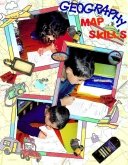
*Academics - I do a page for each subject with pictures of the kids working or doing projects or holding their books or dressed in costumes (for history or geography). Sometimes I've also put reduced copies of notebook pages or added journaling about what we've studied. I also have done special pages for things like "________ learns the alphabet" and "We like to listen to stories" (with pictures of friends and family reading to them.)

*Friends - we always include a page with pictures of friends and family. The definition of "friend" can be as broad as you want to make it. The librarian, the mailman, the kids next door? If it is someone your kids may remember years from now, they would probably enjoy having a picture of them. And years from now when that person is no longer around you may be thankful for the pictures you have of those people you now take for granted. A signature page is also a fun way to collect remembrances.

The Benefits of a Homeschool Yearbook

While our school year books are primarily for my children's benefit, they also have some extra advantages. They are a great way to share our lives with our family and friends. They are a great way to show doubters what a wonderful education our children are receiving. They are a good way for me to exercise my creative talents. And looking through books from past years is wonderful encouragement for me as a teacher. It is also a nice review for my children.

I would encourage you to start this practice in your own home. Sure, it takes a little time, but it doesn't have to be overwhelming. I work on ours a little here and there as I have time. I don't try to make it perfect, so my cuts aren't always straight and I may have smudges here and there, but no one really notices. The important thing is just to have something, so put into it as much or as little as you are able.

Related Posts Plugin for WordPress, Blogger...