Pages

Showing posts with label freebies. Show all posts

Wednesday, April 27, 2016

Creating a Geography Notebook

What Should You Include?
Have you ever wondered what to put in a geography notebook? While the *exact* contents are totally up to you, perhaps you'd enjoy taking a peek inside some notebooks created by another family. Here are some of item we have included in our notebooks. I've included some pictures, as well as links to printables we used or printables that could be used instead of what we used.  

Our binders are divided into eight sections, one for general geography information and one for each continent. This is what you'll find in that first section:

*This post contains affiliate links.

Maps, Globes, & Explorers


  • World Explorer Biography Pages (If you are looking for info on explorers, you can find biographies of notable explorers at the Fact Monster website.)

  • Geography Terms and Definitions: Our list was actually a page copied from a library book, but I think it would be much more educational to have the children create their own list. As my younger children study geography this year, I will have them use Geography Terms Notebook Pages to make their own glossary.

  • Landforms Ready Reference: I picked up this card at Walmart during their back-to-school sales. I could probably have had the kids do some Landform Notebook Pages, but I liked this one-page handy reference guide. It looks nice, and it was inexpensive.

  • Notebook Atlas: Also purchased at Walmart (for a lot less than the Amazon price). Although it is small and details are sometimes hard to see, it can be used for most things that need to be looked up.

  • Compass Rose Worksheet

  • Latitude & Longitude Worksheets

  • Continents Map and List

  • Oceans of the World Map and List

  • World Map (drawn using Draw Right Now)

  • Map showing Plant Life on our Planet (pg. 76 of Considering God's Creation by Susan Mortimer)

  • Columbus pages (drawn using Draw Right Now)

  • Notebook pages and lapbook from Amy Pak's New World Explorer's study


Maps, Globes, & Explorers Freebies on Other Sites


Scroll down to the geography section for Geography Terms Tab Books and Geography Terms Notebook pages with Primary Lines or Basic Lines. (There are also some State Study Notebooking Pages and Country Study pages.)

Printable games and worksheets to teach students about landforms, such as plains, plateaus, mountains, and hills. There are two freebies, as well as many that come with membership to the site.

Montessori learning activity with free printable for learning about the compass rose. Includes cardinal points, half cardinal points, and false points.

Monday, August 5, 2013

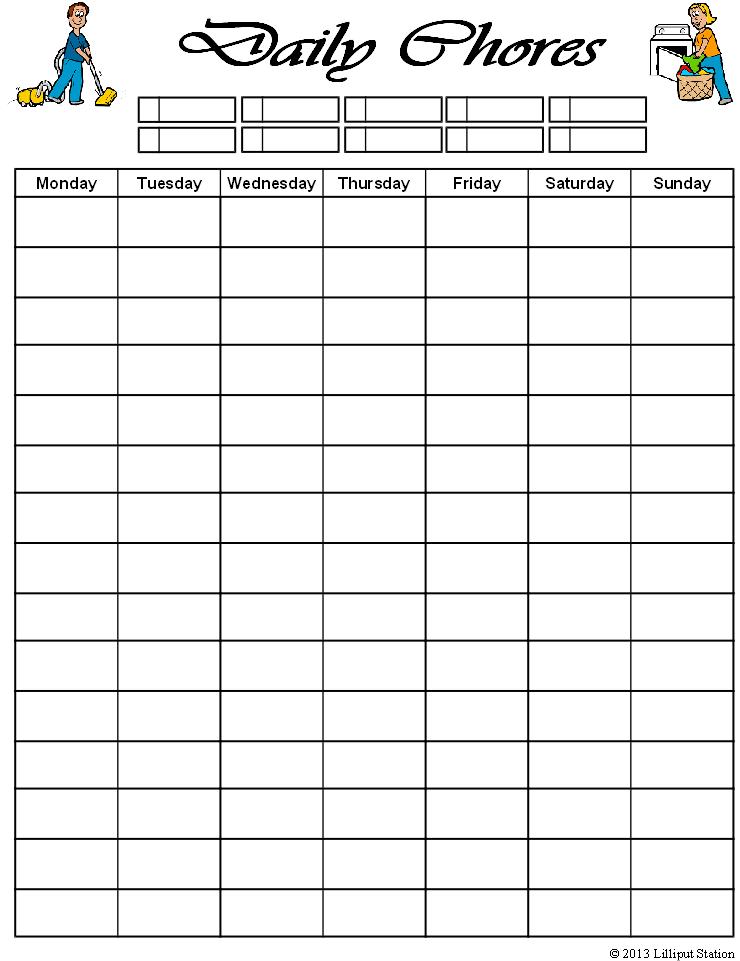
Chore Charts For Large Families

Since the chore chart I used as an illustration on my post about why kids need chores has been so popular, I thought it deserved a post of its own. My first attempts at coming up with a way for my children to keep track of their chores were a disaster. They consisted of separate lists for each child (worked for them, but hard for me if I needed to find who was responsible for a specific chore) and complicated lists with names scribbled all over them. Finally, through a lot of trial and error I came up with a simple system that used color coding. Because I had color coded everything else already (hangers, cups, etc.), my children had no trouble identifying which chores they were responsible for. And it allowed me to have different children doing the same chore on different days, without needing to clutter up the chart with a bunch of names. 


My color code, in order of age: 

  • Blue (son)
  • Red (son)
  • Yellow (daughter)
  • Green (son)
  • Orange (son)
  • Purple (daughter)
  • Pink (daughter)
  • Light Blue (son)
  • Peach (daughter)
  • Brown (all)


Some of the chores that have been on our list at different times, depending on what needed to be done and who was available to help:


  • Make Papa’s breakfast & coffee/ pack lunch (Back when I was in the midst of raising toddlers and nursing babies, my husband started paying our oldest daughter to get up early and fix his breakfast so that I could sleep in. Our 2nd oldest daughter, age 9, now does it for him. It is the only job on the chore list that earns  pay. 
  • Make bed/Straighten bedroom
  • Get dressed/do devotions
  • Help younger sibling dress
  • Exercise
  • Place bedding in the wash
  • Set table for breakfast/ clean up after
  • Make breakfast
  • AM dishes
  • Feed animals
  • Sweep & mop
  • Check garbage and compost- empty as needed
  • Clean  bathroom (wipe counters, fresh towel, etc.)
  • Clean bathroom (toilet and all)
  • Vacuum
  • Dust/wipe walls clean
  • Wash & dry laundry
  • Fold own laundry & put it away
  • Make lunch
  • Lunch clean up
  • Lunch dishes
  • Set table for supper
  • Help with supper
  • Make supper
  • PM clean up
  • PM dishes

Large Family Chore Chart {free printable}


Monday, October 1, 2012

Traditional Textbook or Math Notebooking: Can You Do Both?


Just because you use a traditional math curriculum doesn't mean you can't take advantage of the benefits that come from math notebooking. As with any other subject, the lessons learned in mathematics can be recorded using the notebooking method. While the problems contained in the textbook give the student an opportunity to put into practice the concepts taught, the math notebook is a place where the student gives voice to those concepts. Math notebook pages can include notes on what is being learned (a great reference to use in solving this type of problem in the future), visual illustrations of the concepts learned, and examples of problems from the lesson. The math notebook can even be a place to copy and solve those problems.

Generic Concept Notebook Page


Additional Ways To Use Traditional "Textbooks" With Notebooking:
  • Upcycle Workbooks- The drawbacks to workbooks are that they are consumable, disposable, and the information is diluted throughout a large space of pages. But workbooks can be a good solution when you or your students need a change of pace, or for times when you just need something to keep them in practice while other subjects receive a more intense focus. And when you have finished a workbook, it can be upcycled and put to new use in math notebooking. Directions for completing the workbook pages contain formulas and definitions which can be copied into- or cut out and glued into- a math notebook for later review. Charts and diagrams provide inspiration for additional math notebooking. And colorful clipart cut from old workbook pages can be used to add color and interest to math notebooks.  Even those who are opposed to the use of workbooks can find thrift shop cast-aways to repurpose. (Mad House Academy has a Flickr Photo Set with examples of notebook pages created in this way.)


  • Work Your Way Through Some Library Books- Check the shelves of your library for books on math topics or math puzzle book and do notebooking on the concepts you learn.  My Math Notebooking: Counting and Numbers pages were based on our studies using the book Go Figure! by Johnny Ball and my Math: Geometry pages were a result of our studies using Figuring Out Geometry by Rebecca Wingard-Nelson. We found both of these books in our library.

Links To Other Bloggers Who Use Textbooks With Notebooking:
  • The MacRAK- using a combination of living math, Saxon, Life of Fred, Ray's Arithmetic  and Teaching Textbooks with notebooking.

This is post is the third in the Math Notebooking Series.


Wednesday, August 8, 2012

Integrating Math With Other Subjects


One of the problems with modern schooling is the artificial divisions it creates. Children are put into grades based on their ages, rather than their learning abilities. Learning is labeled as scholastic and non-scholastic. And subjects are divided as if they had no connection with each other. This is one reason many people have a hard time grasping the concept of math notebooking.

We have been trained through this system of artificial divisions to think of math in terms of numbers and equations. And how can you notebook that? But when we step outside of this box, the variety of ways that notebooking can be used in the study of math becomes much more clear.


History & Math: The Fibonacci Sequence

Someone say, "math" and we think numbers. But if someone says, "the history of math" something entirely different comes to mind. For instance,
  • how, when, and by whom were numbers first used?
  • what did those numbers look like, and how did they change over time?
  • what were some of the most important mathmatical discoveries, and who made them?
Think about "geography and math" and you will come up with a different list:
  • how did the first explorers use math in navigation?
  • how do we use mathmatics in navigation today?
  • what do numbers look like in different countries?
  • how is math done differently in those countries?
  • how is math used in mapmaking or in reading a map?
You might be tempted to object that this is not really a study of math at all. But when you child is able to see how math relates to other subjects, they will understand why learning math skills is important for what they want to accomplish in other areas of life.

Here are more ways to integrate math with other subjects:
Once you begin to think of ways to integrate math with other subjects, there is no end to the ideas for math notebooking that you will discover.


This is post is the second in the Math Notebooking Series.


*Go to Part One of the Math Notebooking Series*


Monday, August 6, 2012

Curriculum Plans For The Coming Year


The intention of this post is to give you a look at our curriculum plans for the 2012-2013 school year. However, any list of curriculum used in our eclectic homeschool will automatically be inaccurate and misleading. The problem is that a simple list of curriculum does not show all the things we learn from that are not curriculum. It doesn't show the opportunities we will take advantage of during the school year, nor the various other resources that we add to to those texts. It does not show how we use those texts. Most importantly, it does not reflect the dozens of changes we are sure to make before it is over. What it does do is show you a few of the tools we will be using.

My 16 & 15 year old's Bible study and an
altered notebook to use with the Christian
living books I've assigned for them to read.
So, what's the plan? 
Last year I encountered resistance from a few of my children who were more interested in getting done than getting educated. It was discouraging, and by the end of the year I was pretty burnt out. These three are very alike in personality and learning style. They learn very well by building and doing and experimenting and talking, but they don't want to follow directions or record what they discover. This means that any written assignment becomes a battle ground.

This year has honestly been the most difficult year to plan since we began homeschooling. In fact, we are hoping to start school in four weeks, and I still have not purchased some of my books, nor even decided on everything we will be using. After 12 years of homeschooling, you expect to know everything there is to know about teaching your children. It is hard to admit that your ideas of how to teach don't always match up to how your children learn. In fact, your ideas of how your children learn don't even always match up to how your children learn. So, once again, we will be changing our methods. I'm not sure exactly what this will look like, but I do know that I would like to help my children take a greater interest in their own educations. I want to help them set goals, and give them more freedom in how those goals are accomplished. (Here are two articles I just read that were very helpful: 3 Tips to Transform Your Homeschool Year and Not Working Out?)

I have two students who will be graduating this year and one that will be "unofficially graduating." She will be finishing most of her "scholastic" studies this year, and spend the next year or two on more home-centered studies. (As I was planning out this year, I realized why it is useful to have a plan for all four years of highschool from the beginning. After three very heavy years, there wasn't much left for my three oldest to study this year. I think they would have prefered to spread the load out a little more, but at least we can look forward to a more relaxed year.) So, this year will be one of "tying up loose ends" for my three oldest students.

In addition to their basic subjects, my four youngest students will be doing reports on literature books chosen  off a list of approved titles. They will also be working on scripture memory and will be allowed to choose which verses they work on. Each report written or verse learned will earn them points which they will be able to redeem for (yard sale bought) prizes. Because some of the children have shown weaknesses in  spelling and penmanship (see last paragraph), we will also be emphasizing those.


My  16 and 15 year old sons will be doing the Prepare Thy Work Bible study from Doorposts. In addition to searching the scriptures to learn about the various principles taught, there is a list of supplementary books to read. They, along with their 14 year old sister, will also be doing Auto Upkeep, The Money Book For Teens, penmanship, logic, writing research papers, Bible copywork, and typing. My 14 year old will also be doing Saxon Algebra and the 15 year old a study of animal husbandry/anatomy.


Wednesday, July 25, 2012

Menu Form With Cook's Notes

Earlier this year, I took the baby and  flew to Michigan for a cousin's graduation, leaving the house and the rest of the children to the care of my husband. I was gone for almost a week. My oldest daughter (age 13) took over all the cooking during that time.

I had no doubts about her ability to cook (she's been doing it since she was about 6 or 7), however I was concerned that she might not be able to handle all the organizational details that are involved in feeding a family of  eleven nine. In preparation for the trip, I planned the menu (not unusual since I always plan my menus ahead of time) and precooked as much as possible. My secret weapon was a menu with space for "cook's notes" along the side.


my "secret weapon"

In the "cook's notes" I told her things like "Mon: Get out bread and place on counter to thaw for lunch. Get out two packages of hamburger and place in fridge to thaw for Wed. Cook rice for tonight's casserole." Her orders were to look at the menu every morning and find out what she needed to do to prepare the food for the day. Other than a couple of phone calls concerning the location of certain items, it went off without a hitch.

I'm really thinking I ought to make use of this menu for my own benefit. I don't even want to admit how often I forget to thaw the meat for supper. :)


Friday, July 6, 2012

Using Anchor Charts In Math Notebooks


One of the easiest ways to begin math notebooking is by having your students create anchor charts for key concepts they are learning. In the traditional classroom environment, an anchor chart is created by the teacher (with student help) and hung on the classroom wall. But in a math notebooking environment, the anchor charts will be created by the student (with teacher help) and placed in a three ring binder for future reference. Pinterest is a great place to search for ideas. Here are a few printable math notebooking pages I have created, as well as links to the anchor charts that inspired them:


This is post is the second in the Math Notebooking Series.


Wednesday, June 20, 2012

World Explorer Biography Pages {free printables}

I've been looking through our geography notebooks as I prepare for next school year and have started to make some notebook pages to use with my younger children. Here are some pictures of my most recent creations. Scroll to the bottom for a link to download the pdf file.


Friday, May 4, 2012

Father's Day Project {free printable}

I know we haven't even celebrated Mother's Day yet, but since I AM the mother I don't really have much to do with preparing for that holiday. So, on to Father's Day! Being that I'm usually running behind, you will have to excuse me for actually being early for a change.

I wrote this poem for my husband almost 14 years ago, when my oldest two children were just babies, and put in on a card with pictures of my sons wearing their Papa's boots and  "working" with him around our yard. After seeing a Father's Day project which included a cut-out of a child's shoe print glued inside his father's shoe print, I decided to create a similar Father's Day project for my toddler. (I'd recommend using ink, if possible. I wasn't really happy with the results I got using paint. But maybe it was just because I was trying to take pictures at the same time.)


If you'd like to make your own Father's Day craft, you can download the PDF file of the poem below.

Papa's Feet Poem
Daddy's Feet Poem


Monday, March 26, 2012

Update On My Tabletop Garden

The re-growing celery has made it's way outdoors.
I can't see much difference between the two plants,
 although they were started two weeks apart. {Only
one of these plants survived and it did not produce
 more celery. It just went to seed. So, 
Re-Growing Celery apparently doesn't work.}

The sweet potatoes slips are coming along slowly.

My experiment with re-growing green onions
in water is yielding not so great results.  The greens
come back limp, and see how the bulb is shrinking?
I may try planting these in dirt and see if that makes it worth it.
{Dirt didn't go well either. Another re-growing fail}


Here is my ginger "plant." It isn't growing like it expected
(sprouts out the top). Instead, the nubs are growing out
and turing green. Very interesting. Very slow too.
{I kept this potted up as a houseplant. It looks and smells nice.}

 Want to try growing your own indoor garden? Amanda of Hearts and Trees has created a Tabletop Garden Notebook Page that you can use to record you observations.

Friday, March 23, 2012

Multiplication Wheel {free printable}

I first saw this idea on Pinterest, but it was one of those pins that has been copied so often, the original source seems non-existent. I finally traced it down to a blog post by Robinsunne which came up with an error message.

Since I really wanted to do this activity with my girls, and it looked like a bit too much measuring and designing for a 7 &  8 year old to accomplish, I created a notebook page with a pattern. There are lines to help with the number placement, but they are light enough that they are barely visible after the wheel is colored. (The wheel pictured above is the sample I did to show them.) 

I tried once more to trace down the source before writing this blog post and came up with Robinsunne's Flickr page  showing a picture of the multiplication clock that started it all. You can download my Multiplication Wheel Printable if you'd like to try it with your own children, or do it freestyle (as the original was done) by following the instructions linked below.

* (You can read Robinsunne's original instructions by typing the URL into The Wayback Machine.) 

Wednesday, May 27, 2009

The Study of Stories

 The Study of Stories

I love to study genealogy. I find it fascinating to look at lists of names and dates that tell me who my ancestors were, when they were born, and when and how they died. I enjoy reading those long lists of names in the Bible and figuring out who was alive when various events took place. I even love visiting cemeteries and reading the gravestones. It is interesting to see what names were popular at different times and what each family thought was important enough to record on the headstone.  But what I really love is the stories that are hiding behind all those names and dates. That's why I also love geography- it is the study of the stories that are still being lived.


There are may wonderful  resources available on the internet to help you start learning these stories from many nations. Harvest Ministry is even offering a complete free downloadable homeschool curriculum with an emphasis on missions. Teaching With God's Heart for the World  is a two-volume world missions curriculum by Ann Dunagan. The curriculum includes day-by-day teaching plans, missionary highlights, motivational mission stories, crafts, songs, prayer projects, and hundreds of ways to incorporate a passion for the lost into nearly every subject (including Bible Study, Family Devotions, Reading, Writing, Geography, History, Art, Science, and even highlights for Math).


Everyone, in every part of the world, has a story to tell. And each story is different. But despite the differences, they all have one thing in common. All stories- from Adam until the end of time- are  part of HIS (bigger) story.  And even though the world can seem like a very large place, there is no place so far away that God's love does not reach it.


Wednesday, October 18, 2006

How To Do A Geography Based Unit Study {free printables}


Bringing the World to Your Living Room

So, you've made the decision to do a geography unit study. You've finally let go of your boring (but safe!) textbooks and made a trip to the library. But now what? Just follow these easy steps and soon you will find yourself touring the world from the comfort of your own home.

Where To Go For Info - A few fun places to do your research

  • Countries of the World
    Facts on world and country flags, maps, geography, history, statistics, disasters, current events, and international relations. Profiles of every country include geography, maps, history, current ruler, area, population, capital, largest city, and more.
  • Geographia - World Travel Destinations, Culture and History Guide
    In-depth travel destination guides to over 75 countries, culture, history, travel stories, and more.
  • World Atlas
    A world atlas of facts flags and maps including every continent, country, dependency, exotic destination, island, major city, ocean, province, state & territory on the planet!

Atmosphere


Some people have really good imaginations, but the rest of us find it helpful to be looking at something. Being surrounded by a culture is also very useful for learning! Of course, you can't really set the right atmosphere if you haven't done any research, so get out some of those books and find out about this country. One of our favorite "atmosphere" projects is to make a large copy of the country's flag to hang on the wall by taping nine sheets of construction paper together. For instance, when we studied Mexico, we made a flag with three sheets of green, three of white (with the emblem copied onto the middle one and colored), and three red. This might not work for all countries, but it is great for the others. Other items which add to the atmosphere would be plants or flowers that country is known for (such as tulips when studying the Netherlands), examples of popular art styles, dolls dressed in folk costumes, paper models of buildings or animals from that country, and  any craft projects you make for this country. You could even make a paper window frame and fill it with pictures of scenery, so you could "look outside" and see the view. Music is another wonderful way to add atmosphere. Listen to recordings, or make some native instruments and play your own. Be creative (and ask the kids for help- they're good at this sort of thing.)

Art and Architecture Around the World

Music Around the World

Science Around the World

Adding science to your geography studies is easy to do, and makes your studies even more rich and meaningful. As you study different locations around the globe, you will naturally encounter many scientific topics for exploration. The possibilities are almost endless!
Study the animals/insects/birds/sea creatures that correspond to various countries and the habitats where they live. Study climates, weather, oceans, and landforms. Study trees and flowers. Study the explorers who discovered each country and learn about navigation.
Read biographies of key scientists. When you cover Italy, study Galileo and the history of astronomy. During your study of France, read about Louis Pasteur and cover chemistry topics. In Germany, you can include a study of Albert Einstein and his many important inventions.
  • Biomes of the World
    Answer the question: What's It Like Where You Live? Learn about terrestrial biomes and aquatic ecosystems.
  • Biome Shoebox Dioramas
    Make these shoe box dioramas based on real dioramas at the American Museum of Natural History.

Costume

Not only do costumes add to the atmosphere, but they are also another good excuse to do some research. So, get out those books and find out about the people from this country. Most kids love to dress up, and when they dress up they often start acting out the part. This is a great way to help them internalize the information you have been reading. It also presents a great photo op. (You ARE taking pictures of all this, aren't you? Looking through the photo album is great review! And photos are an excellent way to impress those doubters who didn't think your kids would learn anything in homeschool.) Costumes don't have to be elaborate. Sometimes you don't need anything more than paper, scissors, and some markers to make a great costume. You can make Egyptian collars and bracelets from cardstock, Mexican ponchos from paper bags and sombreros from papier mâché, and Dutch shoes and hats from construction paper. Don't forget to discuss why the people you are studying might have chosen the clothes they wear.

Crafts

If you've been following along, you've already done some crafts. If not, STOP WORRYING ABOUT THE MESS AND HAVE SOME FUN! Yes, there will be a mess, but it will clean up. Meanwhile, your kids may forget everything you teach them, but they will remember that you are the absolute coolest mom. They will remember the fun you had together and how they were more important than a spotless house. OK, so they might not actually think of all that, but I guarantee they'll remember if you make the house more important. Besides, this isn't just for them. You're supposed to be having fun here too. The arts and crafts of a country provide a glimpse of what is important to the people of that country. And imitation of those arts and crafts is a great way to learn about them. And, really, papier mâché is very therapeutic.

Continent Boxes

I've often wondered where to store all the "artifacts" we create during our studies of different countries. I think I've finally found a solution in a simple Montessori inspired idea. Continent Boxes are sort of like treasure boxes- one for each continent- which contain maps, books, and artifacts from the countries on that continent. You can buy or create things specifically for your continent boxes, or you can do a "scavenger hunt" around the house to see what objects you can come up with. The boxes can be plain shoe boxes or plastic totes, or you can decorate them with a map from each continent or a collage of pictures, flags, etc. from that continent.

See my post on creating geography treasure boxes for more ideas.

Looking For Real Souvenirs and Food Items?

Here are some sites where you can order them.
  • Aussie Food Express
    Here's where Aussies in the US find Vegemite, Tim Tams, Violet Crumbles, Cherry Ripes, Shapes and other great tastes from down under.
  • ChinaSprout
    Learn Chinese, Chinese Books, Chinese Clothing, Chinese Jewelry, Moon Cakes and more.
  • A Touch of Dutch
    A Touch of Dutch is a specialty gift store featuring imported Dutch Foods, Blue Delftware, Northridge Gardens massage bars, Heritage Lace, hand-made quilts, and products such as all natural and sugar free foods.

Games

You can learn a lot about a culture from the games it plays. Some games are a way for children to practice skills which will be important for them to have later in life. Most are played using materials that can be found at hand. Climate also plays into what games might be played. You don't find ice hockey in Africa after all.

Field Trips

Alright, these aren't technically part of your living room, but a trip to an ethnic store or festival is still cheaper than a visit to the actual country. The best part is that someone else is doing most of the work for you. You just have to think of where you will go. Visit a pet store to look at tropical birds when you study South America. Or take a trip to the zoo and look for animals from the country you are studying. Most kids love animals and this also presents an opportunity to discuss habitats and such. I know of one woman who would research what breeds of dogs came from each country and arrange a visit to a breeder. Another would visit dance schools to view dances that came from various countries. Again, be creative.
  • Nelis' Dutch Village Theme Park place to learn about the Netherlands in Holland, Michigan.
  • Frontier Culture Museum of Virginia This outdoor, living-history museum currently features six permanent, outdoor exhibits comprised of original farm buildings from Ireland, England, Germany, and Virginia. The Museum's exhibits serve as the settings for interpretative and educational programs designed to increase public knowledge of the diverse Old World origins of early immigrants to America, of how these immigrants lived in their homelands, how they came to America, and how the way-of-life they created together on the American frontier has shaped the success of the United States.
  • Kentucky Down Under  Have you ever met a kangaroo? Ever played a didgeridoo? Ever fed a rainbow (lorikeet)? You could travel 9,500 miles to Australia to do these things or just visit Kentucky Down Under. Nestled away in south-central Kentucky sits a little piece of Australia. At Kentucky Down Under you'll discover a hands-on family fun adventure!

Books

You've already read a lot of books which were full of great information. But don't forget to read a few just for fun. Don't just read about your new country, but read the books that the natives would read. Folk and fairy tales tell a lot about people, and they are easy to remember. Novels set in different countries or biographies of famous people are also good learning tools. Read lots and lots, but skip those books that seem to drag. Tour guides don't have to be boring!

Food

grinding corn for tortillas
OK, I admit it, it's all about the food. You can't visit a country without sampling their food, right? Which brings me to my favorite type of books: cookbooks! You can learn so much from a cookbook. But if you can't find the one you are looking for, the internet is also full of recipe sites. Ideally this should be eaten while in costume. But since we usually have our feast at the end of a study, the costumes are usually wrecked by now. So don't sweat it if your Egyptian feast is eaten in jeans and t-shirts. My kids aren't perfect either. (Not perfect. But really, really cute). Just enjoy the meal and try to remember to take this seriously. Ahem! This is research after all.

Documenting Your Unit

You've spent a lot of time on your unit study, and you'll want to remember everything you learned. Creating a lapbook or a notebook is a great way to record all those interesting facts, and a wonderful keepsake you will treasure (and review) for years to come. Of course, you can create your own from scratch. But here are some great pre-made kits if you're not that brave.

Adding A Mission Emphasis to Your Study

Here is a great resource to help you study geography with an emphasis on missions.
This is the two-volume world missions curriculum by Ann Dunagan. The curriculum includes day-by-day teaching plans, missionary highlights, motivational mission stories, crafts, songs, prayer projects, and hundreds of ways to incorporate a passion for the lost into nearly every subject (including Bible Study, Family Devotions, Reading, Writing, Geography, History, Art, Science, and even highlights for Math). Harvest Ministry is considering republishing this out of print book. In the meantime, they are offering it as free download pdf files.
Related Posts Plugin for WordPress, Blogger...